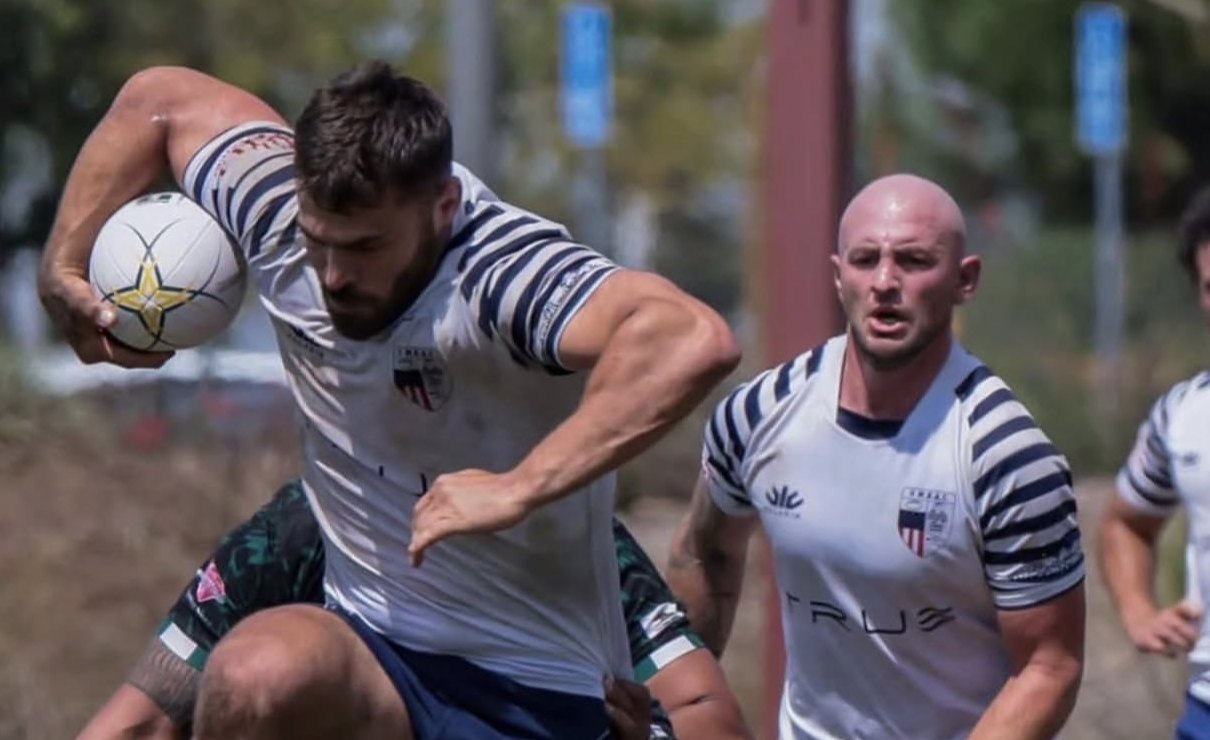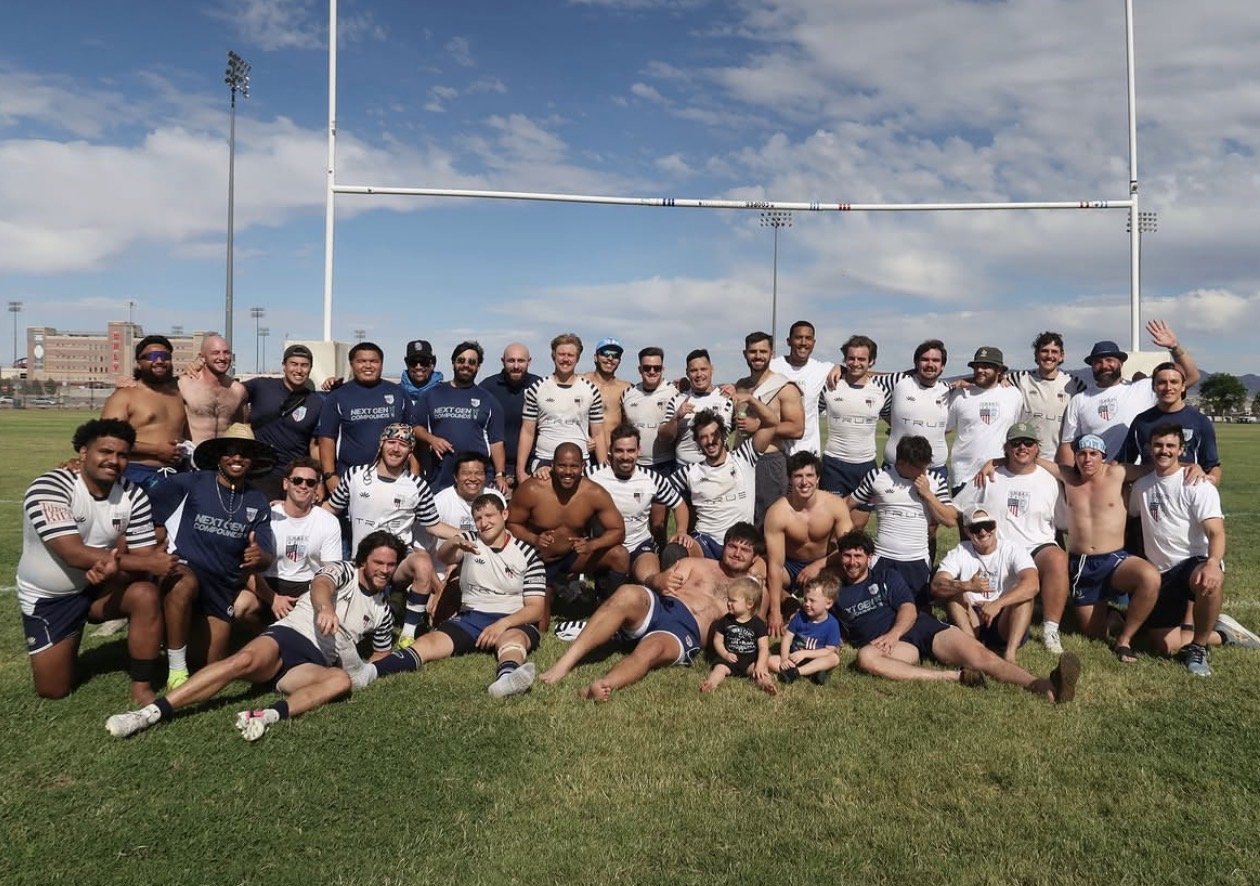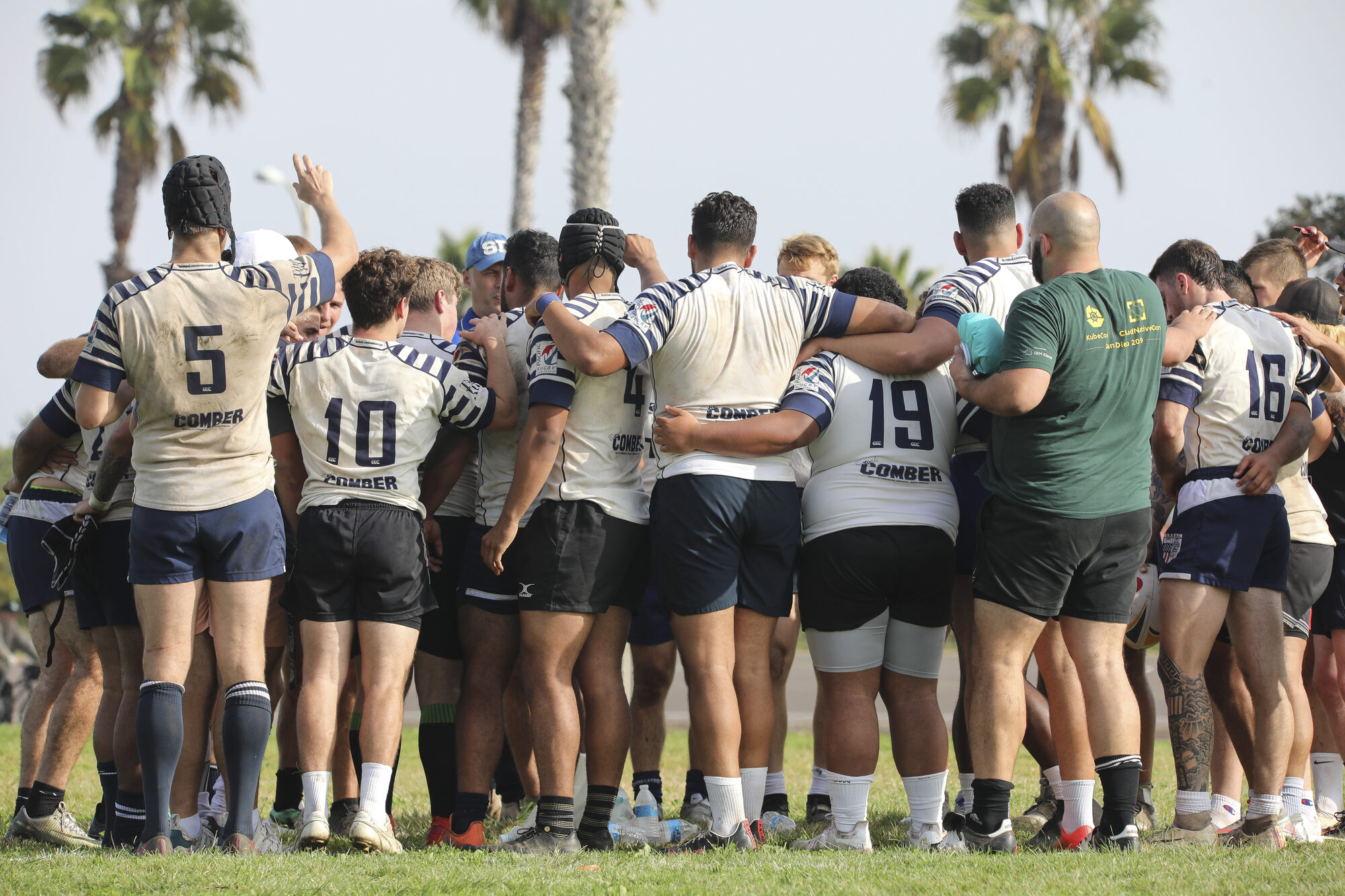
From co-ed non-contact touch to high school competition, OMBAC Wallabies Youth Rugby develops skills, leadership, and camaraderie grounded in “The Wallaby Way”. Training out of Robb Field and Clairemont, our youth pathway feeds directly into high school, college, and senior club rugby.
Co-ed non-contact touchFirst contact with the game, no contact on the field
→
U12–U14
Youth contact rugbyFull-contact fundamentals, The Wallaby Way
→
U16–U18
High school competitionLeague rugby and regional select sides
→
18+
College & senior clubStraight into OMBAC 15s and summer sevens
→
The Archive · 1954 to now
A legacy of grit, sand, and success
OMBAC Rugby's story isn't just about tackles, tries, and trophies. It's a tale of community and the unwavering spirit of Old Mission Beach woven into the fabric of American rugby. Pick a decade and walk through it.
1954
Sand, surf, and a club is born
Through the 1930s and 40s, beachgoers, surfers, swimmers and the regulars at hubs like The Beachcomber built the social athletic networks that ran Mission Beach. In 1954 they formalised it: the Old Mission Beach Athletic Club was incorporated as a multi-sport club. That same year, its founders invented Over-The-Line on the sand — a game that grew into the World Championship OTL Tournament at Fiesta Island and became OMBAC's social and financial anchor for the next seventy years.
Club incorporated 1954Over-The-Line invented 1954Fiesta Island OTLMulti-sport club
OMBAC·1948·001Photo wanted
The Beachcomber crowdMission Beach, c.1948
OMBAC·1954·001Photo wanted
First game of Over-The-LineMission Beach sand, 1954
OMBAC·1954·014Photo wanted
Articles of incorporationOld Mission Beach Athletic Club, 1954
OMBAC·1957·006Photo wanted
Sand sports summerOcean Front Walk, late 1950s
1966
Aztec alumni start a rugby club
OMBAC Rugby was formally established as a rugby union section of the club in 1966, spearheaded by graduating San Diego State Aztec rugby alumni who wanted to keep playing together after college. Two years later the side entered Southern California First Division competition, putting San Diego on the board alongside the established Los Angeles and Santa Monica clubs.
Rugby founded 1966Division I debut 1968SDSU Aztec alumniSouthern California First Division
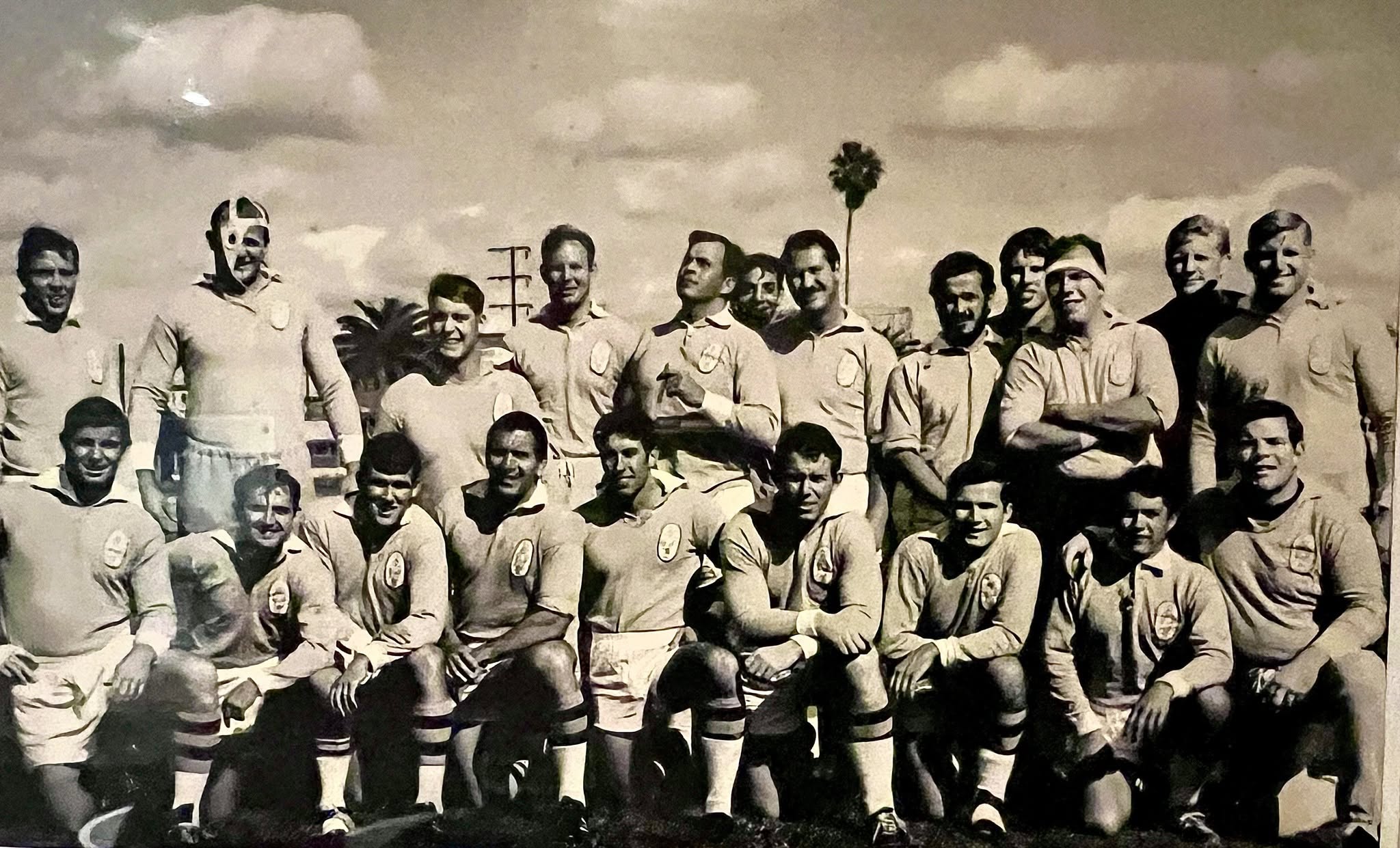
OMBAC·1966·001Photo wanted
The founding sideFirst OMBAC rugby XV, 1966
OMBAC·1968·003Photo wanted
First Division debutSouthern California, 1968
OMBAC·1967·011Photo wanted
Aztecs to OMBACSDSU alumni intake, 1967
OMBAC·1969·008Photo wanted
Early match programmeSan Diego, 1969
1970s
A coastal powerhouse, and the world comes to visit
Through the seventies OMBAC built genuine regional dominance across Southern California, playing out of venues all over San Diego. The club also became a fixture on the international touring circuit, hosting major touring sides from New Zealand, Australia, England and Wales — the sort of opposition most American clubs never saw.
Southern California dominanceInternational touring matchesNew Zealand · AustraliaEngland · Wales
OMBAC·1972·004Photo wanted
Touring side at San DiegoInternational friendly, early 1970s
OMBAC·1975·019Photo wanted
Scrum on a San Diego pitchLeague fixture, c.1975
OMBAC·19—·002
Outside the clubhouseMission Beach, undated
OMBAC·1979·010Photo wanted
Tour jersey exchangeVisiting side, 1979
1985
First silverware, then back-to-back
The eighties turned a strong regional club into the best side in the country. OMBAC took its first National Club Sevens Championship in 1985, then broke through in the fifteen-a-side game with the 1988 National Division I title — and defended it in 1989 to go back-to-back. It was the start of a run that would define American club rugby for a decade.
7s Champions 198515s Champions 198815s Champions 1989Back-to-back national titles
OMBAC·1985·001
First National Sevens titleNational Club Sevens, 1985 · Ed Hagerty
OMBAC·1988·001Photo wanted
National championsUSA Rugby Division I 15s, 1988
OMBAC·1989·001Photo wanted
Back-to-backDivision I 15s champions, 1989
OMBAC·1987·022Photo wanted
Eagles in the squadOMBAC internationals, 1987
1991
The dynasty years
For most of the nineties OMBAC simply was the premier club side in North America. Four more National Division I fifteens titles came in 1991, 1993, 1994 and 1996, with a second National Sevens crown in 1995. Even the near misses were national: runners-up in the 1995 fifteens and the 1996 sevens, third place in 1997.
Third national titleDivision I 15s champions, 1991
OMBAC·1994·001Photo wanted
Back-to-back again1993 and 1994 champions
OMBAC·1995·007
Second Sevens crownConshohocken, PA · 19–20 August 1995
OMBAC·1996·001Photo wanted
Sixth fifteens titleDivision I champions, 1996
2006
Little Q, a three-peat, and the Super League
In the early 2000s OMBAC built and opened Little Q Rugby Field, right alongside San Diego Stadium in Mission Valley — the club's official home pitch, training base and fortress for nearly two decades. On it, the sevens side won a historic three-peat in 2000, 2001 and 2002, and added a sixth crown in 2006. That same year OMBAC took the Rugby Super League title, the top-flight national club competition, averaging over 40 points a game — and founded the Wallabies youth arm, U8 through U18.
7s 2000 · 2001 · 20027s 2006Super League Champions 2006Little Q Field opensWallabies founded 2006
OMBAC·200—·007
Sevens squadThree-peat era, early 2000s
OMBAC·2004·002
Squad photograph2004
OMBAC·200—·031
Ball in the airMatch action, 2000s
OMBAC·200—·044
Scrum engagesMatch action, 2000s
OMBAC·200—·052
Breaking the lineMatch action, 2000s
OMBAC·200—·061
Held upMatch action, 2000s
OMBAC·2006·001
Rugby Super League championsTop-flight national title, 2006
OMBAC·2005·004
National championships, OmahaDivision III, 2005
OMBAC·2003·015
Little Q FieldClub locator map · Mission Valley
OMBAC·2006·040Photo wanted
First Wallabies intakeYouth programme founded, 2006
2010
Depth, and a seat at the top table
The 2010 USA Rugby Division III National Championship said something specific about OMBAC: the strength ran through every side the club fielded, not just the first team. Four years later OMBAC became a founding member of the Pacific Rugby Premiership, week in and week out against the best on the West Coast — Belmont Shore, SFGG, Santa Monica, Glendale and Life West.
D3 National Champions 2010PRP founding member 2014Belmont Shore · SFGGGlendale · Life West
OMBAC·2010·001
Division III national championsUSA Rugby, 2010
OMBAC·2014·001Photo wanted
Pacific Rugby PremiershipFounding member, 2014
OMBAC·2015·023Photo wanted
Little Q on a match dayPRP season, c.2015
OMBAC·2018·009Photo wanted
Last seasons at Little QMission Valley, late 2010s
2021
Home to the coast
When San Diego Stadium was decommissioned and demolished, Little Q went with it. OMBAC moved its home ground permanently to Robb Athletic Park in Ocean Beach in 2021 — putting the club's pitch back on the coast, minutes from the sand it was named after. In 2024/25 the side took the Southern California Rugby Football Union Championship, beating Belmont Shore 34–33 in the title match, with Alex Corbisiero appointed 15s Head Coach and Perry Baker leading the summer sevens.
Robb Field from 2021SCRFU Champions 2024/2534–33 v Belmont ShoreCorbisiero · Baker
OMBAC·2025·001
Under the posts at Robb FieldOcean Beach, San Diego
OMBAC·2025·012
Alex Corbisiero appointed15s Head Coach
OMBAC·2025·018
Perry Baker joins the sevens7s Summer Coach
OMBAC·2026·003
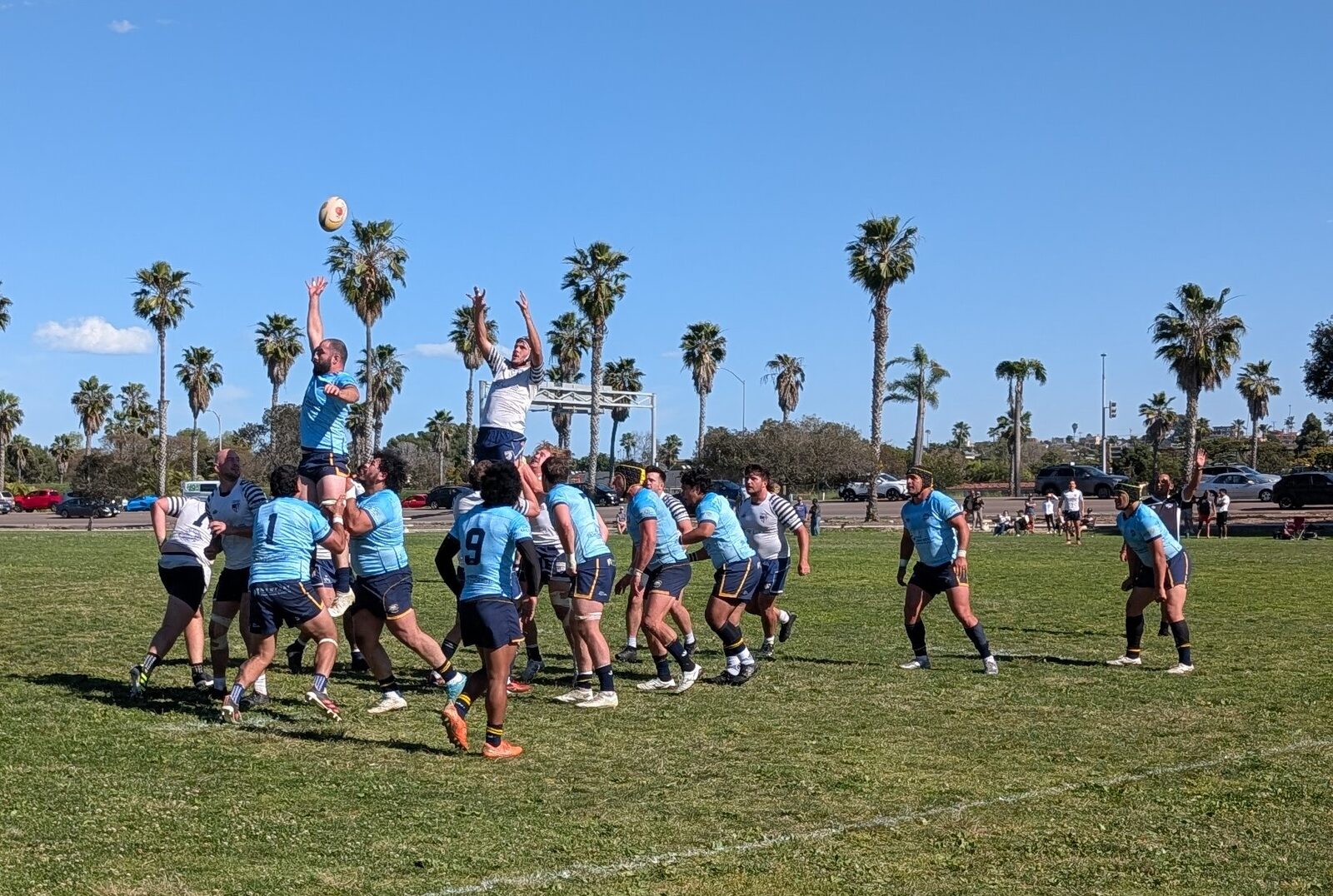
Lineout at Robb FieldOcean Beach, San Diego
OMBAC·2026·004
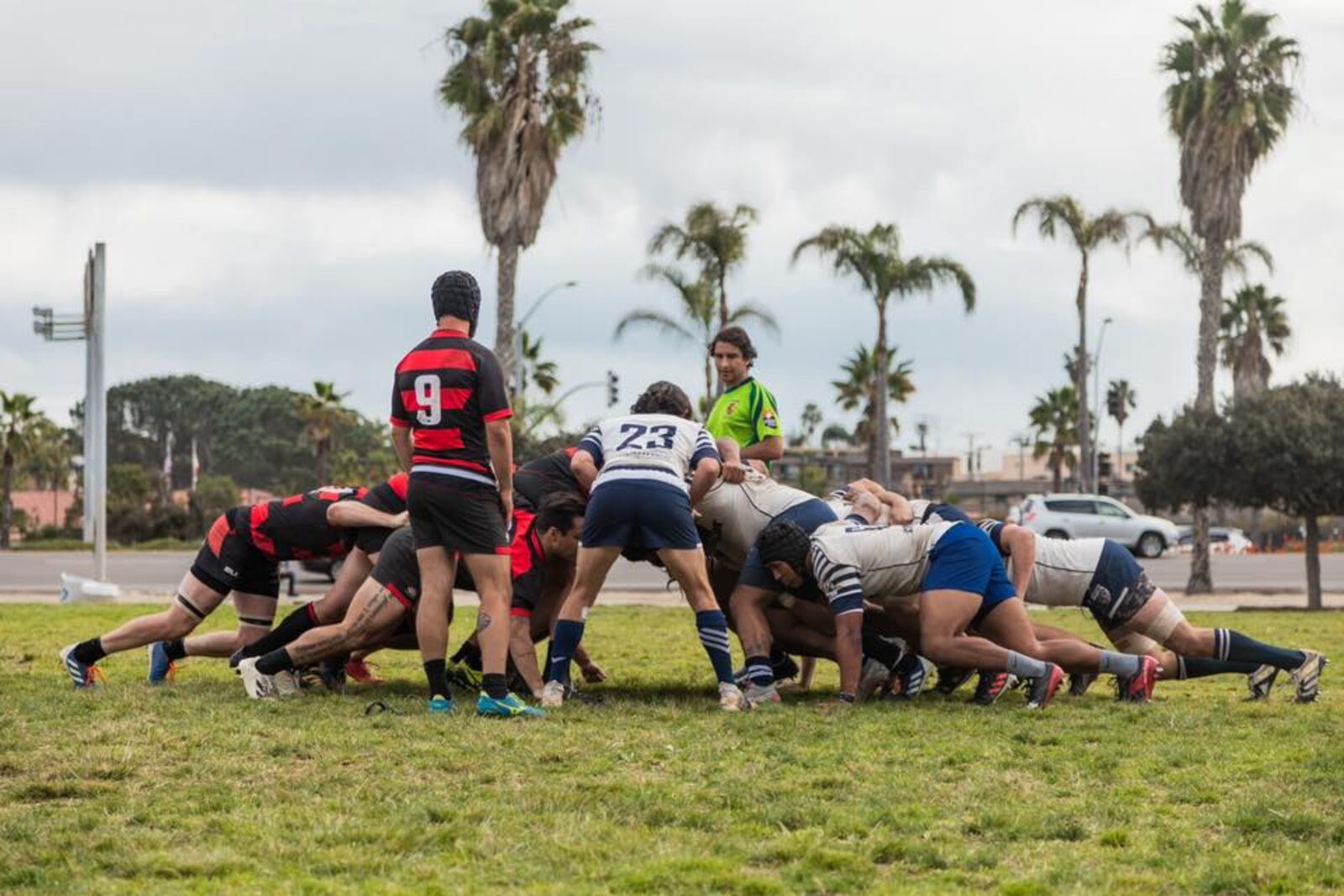
Scrum engagesRobb Field, Ocean Beach
The club archive is still being catalogued. Slips marked photo wanted are gaps we are actively filling — if you have photographs, programmes or press clippings from any of these decades, send them to the club and we will credit you in the collection.
In production · A feature documentary
Seventy years on the sand
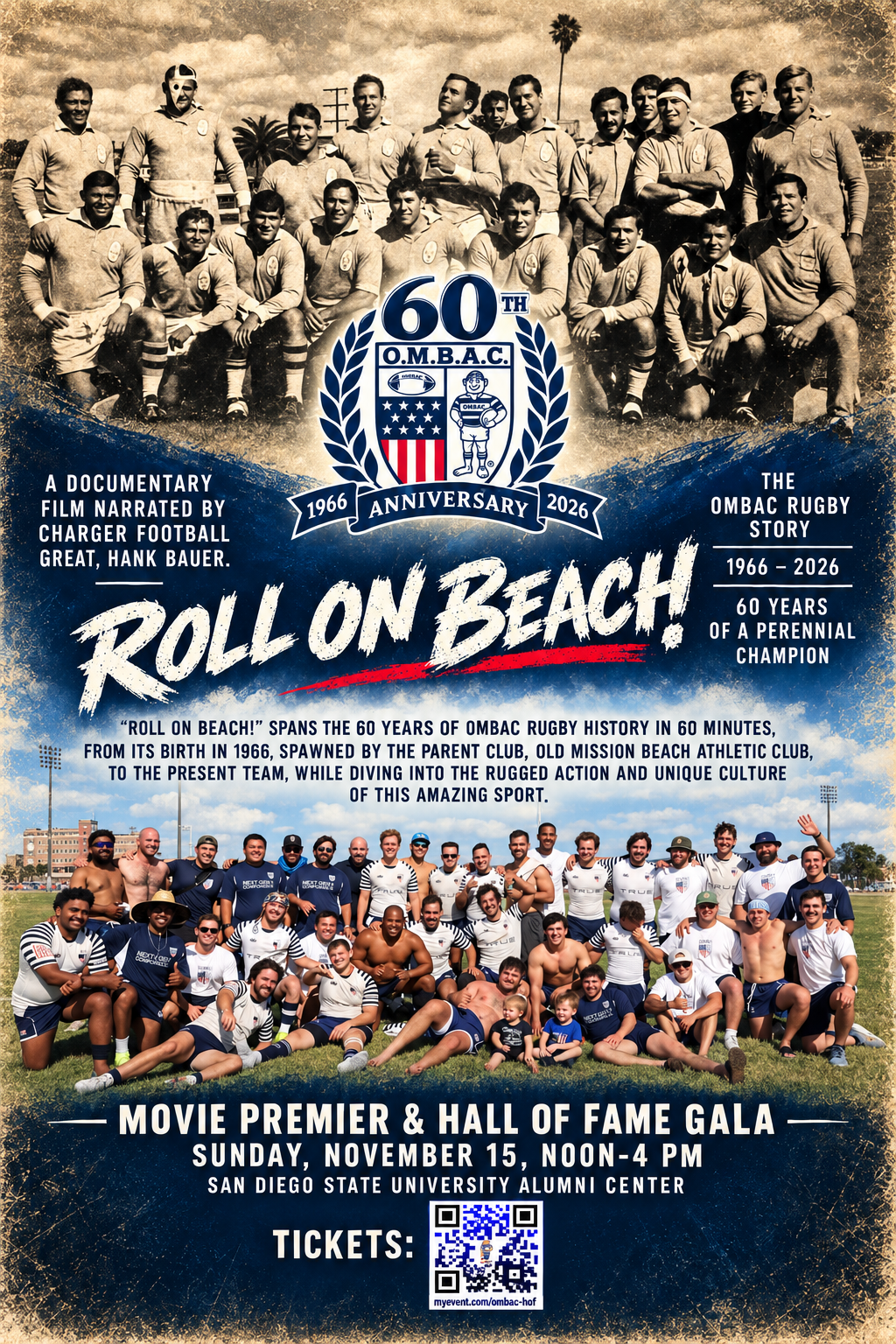
A feature-length documentary on the club that invented Over-The-Line and then went out and won American rugby. Mission Beach culture, the Fiesta Island tournament, six national fifteens titles, six national sevens titles, and the Eagles it sent to the world.
OMBAC is proud to welcome Alex "Corbs" Corbisiero as 15s Head Coach. The former England and British & Irish Lions prop brings world-class experience to Robb Field, having competed and coached at the very top of the game.
Known around the world for his unmatched speed and elite finishing, The Speed Stick redefined what it meant to wear the USA jersey. This summer he leads OMBAC sevens.
2×World Rugby Sevens Player of the Year, 2017 & 2018
3×Olympian: Rio 2016, Tokyo 2020, Paris 2024
293Career HSBC SVNS tries, all-time leading American
7Rugby World Cup Sevens tries
"Welcome to OMBAC. Roll Beach."
The Squad
One club, every level
From the fifteen-a-side season to fast, open sevens on the sand, OMBAC fields sides for players old and new. Find yours.
OMBAC named forty-three players across the 2025/26 Southern California Division 1 season, from the opening round to the Pacific Super Regional. Appearances and scoring are taken from official league team sheets. Rows marked Profile open a full page; the club can send biographical detail for any other player and it will be added.
Starting XV
SoCal D1 Final · Belmont Shore 17–23 OMBAC
11 April 2026
1Quinton Tindel
2Brayden Pinto
3Jacob Merklinger
4Teddy Alberton
5Levi Penter
6Michael McPherson
7Joshua Butler
8Michael Ramos
9Aidan Konja
10Oren Cargill
11Nicholas Poure
12Joseph Koroiadi
13Shane Dempsey
14Ari Flink
15Alfonso Cornu-Labat
Replacements used: Mark Kearney, Edlen Hernandez, Ilan Izakov, Sebastien Chilcott, Tommy Wagner, Dante Brown, Quan Nguyen, Daniel Komorowski. Cornu-Labat drop goal 4’, Cargill penalty 25’, Alberton try 59’, Poure try 62’, Cargill penalty 77’.
Squad data from official Rugby Xplorer team sheets for the SoCal Men’s Division 1 competition, covering all twenty-four OMBAC matches across 2024/25 and 2025/26. Names appear as the club entered them. OMBAC has not published a captain for 2025/26, so none is listed here — Nicolas Gilli is the first-choice scrum-half, which is all the record supports.
Roll of Honour
Silverware on the sand
Decades near the top of American rugby, in both the fifteen-a-side and sevens game.
Seven USA captains. A most-capped Eagle. Four World Cup cycles of national coaching, management and medical staff. This is the line of players and figures the club has sent into the USA national team and the professional game.
Twenty capped USA internationals and five national coaching, management and medical staff. Chris Lippert appears twice: once as a capped prop and USA captain, once as Eagles team manager.
Fixture Hub
Match centre
OMBAC play in USA Club Rugby Men’s Division 1, Southern California conference. Home games are at Robb Athletic Park. Come down to the pitch, find a familiar face, and see what rugby on the coast is all about.
12 Apr 2025SoCal D1 Final
BS
Belmont ShoreLong Beach · first title since 2016
34–33Won
Jan 2026SoCal D1
BS
Belmont ShoreRegular season
33–33Drew
Jan 2026SoCal D1
OA
Old AztecsRegular season
84–0Won
Apr 2026SoCal D1 Final
BS
Belmont ShoreChampionship retained
23–17Won
24–26 Apr 2026Super Regional
SeattlePacific Super Regional semi-final · Las Vegas
—Result unconfirmed
OMBAC came through January 2026 unbeaten at 3–0–1, level at the top of the Southern California conference. Results verified against USA Club Rugby and SCRFU. The Super Regional semi-final result is not in any source the club has confirmed, so it is left blank rather than guessed. No 2026/27 fixture list has been published yet.
OMBAC runs a summer sevens programme out of Robb Field, led this season by two-time World Rugby Sevens Player of the Year and three-time Olympian Perry Baker. Open to all levels, new and returning. Tournament dates for the coming summer are being confirmed — register your interest and we will send them as soon as they are locked.
Youth rugby from U8 co-ed non-contact touch through high school competition is run by the OMBAC Wallabies, training out of Robb Field and Clairemont. Their full schedule, age groups and registration live on the Wallabies site.
OMBAC plays its home matches at Robb Field in Ocean Beach, minutes from the sand that gave the club its name and shared with cross-town rivals the Old Aztecs. Grass under your boots, ocean air, and a sideline that feels like family.
A welcoming environment for players of all skill levels and backgrounds. Everyone gets a shot at the pitch.
Camaraderie
Strong bonds built through a shared passion for the sport and the unique beach-town spirit that runs through the club.
Dedication
We push our limits and strive for excellence, on the field and off it. That is what it takes to bleed blue.
Belmont Shore again, and again by a single score. OMBAC beat their oldest rivals 23–17 to keep the Men’s Division 1 Southern California Championship, and with it a return ticket to the Pacific Super Regional.
Twelve months after the 34–33 final that ended a nine-year wait for silverware, the same two clubs met for the same trophy. The margin was wider this time, but only just: six points, and a match that stayed live to the whistle.
It is the second consecutive Southern California title for a club that spent the back half of the 2010s outside the winners’ circle, and it was built on a season of consistency rather than a single good afternoon. OMBAC came through January unbeaten and sat top of the conference, and never gave the position up.
23–17Final score
2Straight SoCal titles
D1Men’s Division 1, SoCal
The rivalry
Belmont Shore have been the measuring stick for Southern California club rugby for as long as OMBAC have been chasing them. The two sides met three times across the 2025/26 season and were separated by a total of seven points across the lot: a 33–33 draw in the regular season, and finals decided by one point and by six.
Three meetings. Seven points between them.
What it sets up
The championship carries qualification to the Pacific Super Regional, the bracket that feeds the national picture. OMBAC travelled to Las Vegas for the semi-final against Seattle in late April.
OMBAC announced Alex “Corbs” Corbisiero as Men’s Head Coach on 20 October 2025. The former England and British & Irish Lions prop arrives at Robb Field with thirty-one Test caps and a professional coaching career already behind him.
Corbisiero played thirty-one times for England and toured with the British & Irish Lions in 2013. He won a Premiership title with Northampton Saints. Since moving into coaching he has worked as a scrum coach in the professional game in California, with the LA Giltinis and the San Diego Legion — which is to say he did not arrive in San Diego for this job. He was already here.
31England caps
2013British & Irish Lions tour
PremiershipChampion, Northampton Saints
ProScrum coach, LA Giltinis & SD Legion
Why it matters for a club side
Front-row coaching is the part of rugby that most club sides cannot buy. A specialist scrum coach who has packed down in Test matches and then taught it professionally is an unusual thing to find at Division 1 club level anywhere in the United States, let alone one who lives twenty minutes from the ground.
The appointment also reaches down the pathway. Corbisiero is listed as Director of Rugby for the OMBAC Wallabies’ U16–U18 age groups, which puts the same voice in front of the players who feed into the senior squad.
The same coach at U16 and at Robb Field on a Saturday.
The season that followed
OMBAC went through January 2026 unbeaten, finished top of the Southern California conference and retained the Men’s Division 1 SoCal Championship with a 23–17 win over Belmont Shore.
A one-point final in Long Beach, settled off the kicking tee, gave OMBAC a first championship since 2016.
Fullback Alfonso Cornu-Labat kicked every conversion he was given and added two penalty goals. In a match decided by a single point, that was the entire margin and then some — the difference between the two sides was not a try, it was accuracy.
One point. A perfect night off the tee.
Nine years
OMBAC’s honours board is one of the deepest in American club rugby — six national fifteens titles, six national sevens titles, a Rugby Super League championship — but the run had stalled. The 2025 final ended a wait that stretched back to 2016.
34–33Final score
2016Previous title
100%Conversions, Cornu-Labat
And then they did it again
The following season OMBAC retained the title, beating the same opponents 23–17.
Winning Southern California put OMBAC into the Pacific Super Regional semi-final against Seattle, in Las Vegas, over the weekend of 24–26 April 2026.
The Super Regional is the stage above the conference championship: the winners of the Pacific conferences in one bracket, with the national picture beyond it. It was OMBAC’s second consecutive appearance, having qualified through the 2025 title as well.
How they got there
Unbeaten through January 2026 at 3–0–1, level at the top of the Southern California conference
A 33–33 draw with Belmont Shore in the regular season
An 84–0 win over Old Aztecs
A 23–17 win over Belmont Shore in the Southern California final
Two straight conference titles. Two straight trips to the regional bracket.
A beach club that invented its own sport in 1954, took up rugby in 1966, and then spent thirty years winning American club rugby.
Sand first, rugby second
Through the 1930s and 40s the beachgoers, surfers and swimmers who ran Mission Beach built the social athletic networks that would become a club. In 1954 they formalised it, and the Old Mission Beach Athletic Club was incorporated as a multi-sport club. That same year its founders invented Over-The-Line on the sand — a game that grew into the World Championship OTL Tournament at Fiesta Island and has been the club’s social and financial anchor ever since.
Rugby came twelve years later. In 1966 San Diego State Aztec alumni who wanted to keep playing after college started a rugby section, and by 1968 the side had entered Southern California First Division competition.
The winning years
The first national silverware came in 1985 with the National Club Sevens Championship. The fifteens broke through in 1988 and defended in 1989, then took four more in 1991, 1993, 1994 and 1996. A second sevens crown came in 1995, a three-peat in 2000, 2001 and 2002, and a sixth in 2006 — the same year OMBAC won the Rugby Super League, averaging over forty points a game, and founded the Wallabies youth arm.
1954Club incorporated
1966Rugby founded
12National championships
20+USA Eagles produced
Six national fifteens titles. Six national sevens titles.
Home to the coast
For nearly two decades the club played at Little Q Rugby Field, built alongside San Diego Stadium in Mission Valley. When the stadium was decommissioned and demolished, Little Q went with it. In 2021 OMBAC moved its home ground permanently to Robb Athletic Park in Ocean Beach, putting the pitch back on the coast, minutes from the sand the club was named after.
SourcesClub history as recorded in the OMBAC archive on this site — walk it decade by decade belowOpen the archive
From the NFL to a rugby pitch
Dan Lyle was born in Louisville, Kentucky on 28 September 1970, the son of a two-star general, and grew up in thirteen different cities before he turned eighteen. He came to rugby late and sideways: an outstanding college football career at the Virginia Military Institute, a try-out with the Washington Redskins, and then a contract with the Minnesota Vikings. He picked up rugby at twenty-three, essentially as cross-training, in case the NFL called.
It called. So did Bath. He chose Bath.
The OMBAC years
Before England, there was San Diego. Lyle played for three American clubs in three years — Washington RFC in 1993–94, Aspen in the summer of 1994, and then OMBAC in 1995 and 1996. It was the most decorated stretch of his domestic career: he led OMBAC to the 1995 National Club Sevens title and the 1996 National Club Fifteens Championship. Two of the club’s twelve national championships have his name on them.
He also represented Southern California in 1995 and 1996, having turned out for Potomac and the Eastern Rugby Union the year before.
Captain America
At Bath from 1996 to 2003 he made 125 senior appearances, captained the side on several occasions between 1998 and 2003, led it outright in 2000–01, and won the European Championship in 1998. English rugby crowds gave him the nickname Captain America. He was Premiership Newcomer of the Year in 1996–97, named in All World 15s selections in 1997, 1999, 2001 and 2003, and rated the best number eight in the world by both Rugby World and Rugby News.
He followed his heart, chose rugby, and English crowds named him Captain America.
The Eagles
Lyle debuted for the United States against Ireland in 1994 and was made captain two years later. He made fifty-one appearances for the Eagles and was capped forty-five times, retiring from international rugby after the 2003 Rugby World Cup. He played four Hong Kong Sevens tournaments and captained the USA to a Bowl victory at the 1997 Sevens World Cup.
He turned out twice for the Barbarians, in 1997 and 2000, and was named Man of the Match on debut. A short spell at Leicester — twelve appearances across 2003–04 — closed out his professional career.
After the game
Lyle became Executive Vice President of United World Sports / USA Sevens, having joined in 2006 as tournament director of the USA Sevens in Las Vegas. He has worked as a colour and studio analyst for NBC, NBC Sports Network, ESPN and Fox Sports. The US Rugby Foundation inducted him into its Hall of Fame in 2016 and gave him the Sweeney Award in 2020.
Brian Vizard was born in Grand Rapids, Michigan on 4 July 1959, the youngest of six, and came to rugby out of ice hockey — an All-City defenseman at Grand Rapids Catholic Central. He was at the very first practice the Grand Rapids club ever held, in the spring of 1978.
Eleven years at OMBAC
Vizard is on more OMBAC championship team sheets than anyone else on this page. He was in the nine-man squad that won the club’s first national title, the 1985 sevens at Hi Corbett Field in Tucson, then took five fifteens crowns — 1988, 1989, 1991, 1993 and 1994 — wearing eight in most of the finals. He retired from club rugby in 1995, aged thirty-six, which is why his name is absent from the 1996 side.
His halfback partnership with Mike Saunders has been called one of the best 8–9 combinations American rugby has ever seen. He also won titles with San Diego County, the SoCal Griffins and the Pacific Coast Grizzlies.
Six OMBAC titles. Eleven years. One club.
Two World Cups
Twenty-two caps between 1986 and 1991, twenty of them at number eight, plus twenty-one sevens internationals. He debuted against Japan at Torrance on 31 May 1986 in a 9–9 tie. At the 1987 World Cup he started all three pool matches, and his linebreak set up Gary Lambert’s decisive try in the 21–18 win over Japan — the United States’ first World Cup match and first World Cup win.
Four years later he captained the side, starting against Italy at Cross Green, Otley, before being injured out of the tournament. He played the inaugural World Cup Sevens in 1993 and retired after twenty-two international tours.
Twenty years at the Foundation
Vizard was executive director of the US Rugby Super League from 1996, then President and CEO of the US Rugby Foundation from July 2004 until he retired in July 2024 — two decades, during which “A Ball for All” distributed more than eighteen thousand rugby balls. He has worked on more than seven hundred rugby broadcasts since 1995. Hall of Fame, 2016.
One caveat: Wikipedia’s 1991 World Cup squad page names Kevin Swords as captain outright. The contemporaneous match reports have Vizard leading the side against Italy before his injury.
Mike Saunders was born in Monterey, California on 17 May 1959. He started rugby at the US Naval Academy in 1979, left the academy in 1981, and was recruited to OMBAC by Bing Dawson in the spring of 1983 for a tour of Fiji, Australia and New Zealand. He stayed ten more seasons.
The captain of the dynasty
Saunders captained OMBAC from 1985 to 1993, playing nearly every first-side match, and led the club to four national fifteens titles — 1988, 1989, 1991 and 1993. He was in the 1985 sevens-winning nine as well. Club MVP in 1988 and 1989, Most Valuable Back in 1990 and 1991, and Rugby Magazine’s Most Valuable Back at the National Championships in back-to-back years.
Peers call him the best USA scrum-half of all time, and the best USA captain of all time.
The Eagles
Twelve caps between 1987 and 1989 plus nine in sevens. He debuted against Tunisia at Pebble Beach on 3 May 1987 and scored a try in a 47–13 win. At the 1987 World Cup he played all three pool matches, starting at nine against Japan and England and coming on for the injured Dave Dickson against Australia. Against England he touched down in-goal to deny Peter Winterbottom’s chip.
He captained the Eagles five times, including the 1988 tour of England, France and the Soviet Union, and led the Pacific Coast Grizzlies to South Africa with wins over Orange Free State and Natal.
Boise
He moved to Boise in 1993, took over Snake River RFC and built a national program: a record of 265–59, fifteen Pacific Northwest league titles, five Final Fours and the 1996 USA Rugby National Championship. He was head coach of the USA Men’s National Sevens side from 1993 to 1996, and is now sevens head coach at Boise State. Hall of Fame, 2018, inducted in Houston alongside Bing Dawson.
Dave Hodges was born in Long Beach on 15 September 1968 and discovered rugby by watching Belmont Shore RFC train on the same field as his high-school football team. He went to Occidental College to play football, picked up rugby as a freshman, and became a two-time dual All-American in both sports.
Second only to Clever
Fifty-three caps between 1996 and 2004, and twenty-eight of them as captain — a record for a USA captain that stood until Todd Clever passed it in 2013. He debuted as a substitute against Uruguay at Fletcher’s Fields in Markham, Ontario, and won his last cap against France on 3 July 2004, a 39–31 defeat rated one of the best American performances against a tier-one nation until 2018. He retired that January after tearing a pectoral muscle.
He played at the 1999 World Cup and captained the side at 2003, where the Eagles recorded their best World Cup return to that point, beating Japan 39–26.
OMBAC, then Wales
Hodges joined OMBAC in 1995 and was part of the 1996 national championship team. His professional career was spent entirely in Wales: Llanelli and the Scarlets across two spells between 1997 and 2005 with more than 150 appearances, and a season at Bridgend. He won both Players’ Player and Fans’ Player of the Year at the Scarlets, and was Llanelli Player of the Season in 2001–02 — while also working as the region’s strength and conditioning coach.
Modern Welsh rugby owes its success, in part, to an American.
That line is not hyperbole. Hodges was the Scarlets’ player representative during the negotiations that regionalised Welsh rugby. In 2002 he played forty-four professional and international games in twelve months. He had his nose broken twice in the same match and carried on.
After
Head coach of the USA Collegiate All-Americans, assistant national coach across two spells, head coach of the Denver Barbarians, then High Performance Manager and Game Development Officer for USA Rugby. He is currently general manager of the US Men’s National Team. Hall of Fame, 2017; USA Rugby Athlete of the Year 2005; Rugby Magazine Player of the Decade for 2000–2009.
Sources differ on two numbers: 53 or 54 caps, and 27 or 28 as captain. Both variants appear in official material.
Kevin Higgins was born in Buffalo on 8 November 1962. As a senior tailback at Mater Dei High in Santa Ana he carried 187 times for 1,100 yards without a single fumble — his Hall of Fame citation calls it an early sign of his sure handedness with a rugby ball. He was undefeated in the 300 low hurdles as both a junior and a senior, and once won the league 400 metres and anchored the champion 4×400 and mile relays on the same day.
He went to Cal Poly San Luis Obispo on a football scholarship. When the head coach left for Arizona after his freshman year, Higgins and several football team-mates quit and joined the rugby team. He first touched a rugby ball as a sophomore and was a Collegiate All-American in each of his last three seasons.
The first American to twenty-five caps
Twenty-eight caps between 1985 and 1991, four tries, plus sixteen sevens appearances. He debuted against Japan in Tokyo on 21 April 1985 while still a college junior. He was the first American to reach twenty-five caps, and twenty-eight was then the national record.
He started at thirteen against Japan in 1987, in the United States’ first World Cup win, and at twelve against Italy in 1991. In 1989 he captained the Eagles on tour to Argentina and Uruguay. In 1991 he became the first modern-era Eagle invited on the Barbarians Easter Tour, and was selected for a World XV alongside Alan and Gary Whetton, Grant Fox and Buck Shelford.
OMBAC
Two national championships, 1988 and 1989, and he is named on both team sheets — at centre in 1988, with a try in the final. He finished his club career with the Old Blues of Northern California.
His pre-game talks were legendary — full of inspiration, sound advice and spittle.
That is Ray Green, whom Higgins coached at Cal. Higgins was an assistant there under Jack Clark from 1993, responsible for the backs, and was still coaching when he died on 30 October 1996, nine days short of his thirty-fourth birthday. Green went on to co-captain OMBAC and sits on the board of the US Rugby Foundation — his own page is here.
The bus to Grenfell
The story his team-mates still tell: on a bus to a training session in Grenfell, Australia, Higgins sold bingo cards to every player and coach aboard, having worked out in advance how to make everyone on the bus hit bingo on the exact same number. The hard part was getting “O 72” out of his mouth before he collapsed laughing in the aisle.
The US Rugby Foundation created the Kevin Higgins Scholarship Program in 2008. It has made 183 awards. He was inducted into the Hall of Fame in 2012.
Chris Lippert was born in San Diego on 31 March 1963 and played loose-head prop for the United States from 1989 to 1998. At his retirement he was the most-capped American player in history. His ten-year Eagles tenure came in an era when five years was considered lengthy.
Five titles, and the captaincy in two of them
Lippert’s OMBAC record is the most decorated on this page after Vizard’s: national championships in 1989, 1991, 1993, 1994 and 1996. He is roster-verified at prop in the 1991, 1993 and 1994 finals, and he captained the 1996 side and scored a try in the final — Bing Dawson’s sixth crown in nine years, and the first American championship contested by sixteen teams.
He is absent from the club’s first title in 1988, having joined after the 1987 college season — a season that ended with San Diego State going 13–0 and beating Air Force 10–9 for the National Collegiate Championship, coached by Steve Gray.
Italy, and a broken World Cup
He played one World Cup, in 1991, starting at loose-head against Italy and against New Zealand, where he was injured in the second half and walked off under his own power but visibly groggy. He captained the Eagles in three tests in 1996.
Three Barbarians appearances — an honour then given to only two Americans before him.
Both sides of the touchline
Lippert finished playing with the Huntington Beach Unicorns in 2000, then managed both the Eagles sevens and fifteens sides from 2001 to 2003, including the 2003 World Cup. He has coached at OMBAC and San Diego State and refereed for the Southern California RFU. Hall of Fame, 2020.
He appears twice on this page for that reason — once as a capped prop and USA captain, once as Eagles team manager.
Todd Clever was born in Palm Springs on 16 January 1983, grew up in San Jose and played seventy-six tests for the United States between 2003 and 2017 — more than any American before him. He debuted off the bench against Argentina in Buenos Aires aged twenty, and captained the side a record fifty-three times.
He was a three-time Collegiate All-American at the University of Nevada, Reno, and played three USA U19 seasons before that.
The try of the tournament
Clever was in three World Cup squads — 2003, 2007, and 2011 as captain. At the 2007 tournament he intercepted a pass against South Africa that led to Takudzwa Ngwenya’s try, still the most famous play in American rugby history.
The first American-produced player to play Super Rugby.
Four countries
North Harbour in New Zealand from 2006; the Golden Lions in South Africa in 2009 and 2010, where he became the first American-produced player in Super Rugby; Suntory Sungoliath in Japan, winning the Top League in 2012, then NTT Communications Shining Arcs; Newcastle Falcons in the English Premiership in 2015–16; and Austin Elite in Major League Rugby, where he was both co-owner and player.
OMBAC
Clever’s OMBAC years fall well after the championship era on this page. He rejoined the club in 2015 on leaving Japan and again in 2017, winning a Cal Cup and the 2017 Pacific Rugby Premiership title. He is one of three OMBAC men in the 2007 World Cup squad, with Dan Payne and Tui Osborne.
Released, and restored
In July 2015 USA Rugby released him from the squad for conduct violations, and he missed that year’s World Cup. Under a new head coach he was reinstated and restored as captain, and scored three tries in a 30–22 win over Canada in February 2016. He was the first rugby player featured in ESPN The Magazine’s Body Issue, and after retiring he tried out for WWE. Hall of Fame, 2021.
Sources differ: 76 caps and 16 tries per ESPN’s test record; 51 or 53 matches as captain depending on the source.
William Neil Leversee was born in Van Nuys on 2 June 1964 and raised in La Cañada. He won fifteen caps between 1988 and 1996 and scored three tries — the first of them on debut, against Romania at the Sparta Stadium in Moscow on 17 September 1988, in an American win.
At six foot four and 235 pounds he was, per his induction citation, one of the youngest locks of his era to earn a cap at twenty-four, using his athleticism against bigger opponents.
Ten years at OMBAC
Leversee played for OMBAC from 1987 to 1997 and was part of five national championship sides: 1988, 1989, 1991, 1994 and 1996. He is named at lock on four of those team sheets. His absence from the 1993 side matches the professional hiatus in his citation — he was abroad.
In 1994 he became the first American to play in Italy’s top division.
That was with Mirano. He also played in Natal, South Africa, and at Auckland University in 1989, the same year he captained the Junior Eagles on tour to New Zealand.
One World Cup match
He started against Italy at the 1991 World Cup and was a reserve against New Zealand and England. He toured England, Russia and France in 1988, New Zealand and Argentina in 1989, and British Columbia, Australia and Japan in 1990.
Thirty years of coaching
Leversee has coached San Diego Youth Rugby since 1994. He took Torrey Pines High School to three consecutive Southern California championships between 2012 and 2017, then La Jolla High School to back-to-back titles. He has announced youth and high-school rugby since 2017 and advocates for player medical welfare. He entered the Hall of Fame in the class of 2025.
Jon Hinkin — no “h”, as he points out — was a soccer and rugby star at Saint Mary’s College, Moraga. At the 1993 Fiji Sevens, the sevens archive records that he became almost certainly the first American to score a try against Fiji in both soccer and rugby.
Thirty-eight sevens caps
He debuted at the Benidorm Sevens in 1992, scoring in a 36–0 rout of the Public School Wanderers, and captained the USA sevens side in 1997 and 1998. He played the inaugural World Cup Sevens in 1993 and was a reserve for the 1997 squad. Across Canberra, Fiji and Hong Kong in 1993 he scored in the Canberra Plate semi-final, against Fiji, and the winning try against the Solomon Islands.
Twelve national championships
Playing for OMBAC, Hinkin won twelve national championships across fifteens and sevens — the largest club haul of anyone on this page. He is roster-verified on the wing in the 1993, 1994 and 1996 fifteens title sides; the rest were won in sevens, for which no rosters survive.
Rugby has been an integral part of my life for almost forty years.
He built the Las Vegas Invitational
Hinkin sat on the USA Rugby board from 1999 to 2002, then spent thirteen years at United World Sports as VP of Competitions and Tournament Director, running events with more than forty million dollars of annual economic impact. He conceived and founded the Las Vegas Invitational, now the largest rugby tournament in the United States, and was promoted to USA Sevens Tournament Director in 2017.
In August 2023 he became the first-ever COO of the US Rugby Foundation, working under Brian Vizard — his old OMBAC number eight. He is now the Foundation’s President and CEO, and the president of OMBAC Rugby.
Steve Gray was born in St. Louis in 1948 and weighed ninety-five pounds in high school — too small for football. He found rugby in 1969 from an advertisement in the Arizona Daily Wildcat, while at the University of Arizona on a golf scholarship.
I really had no idea about rugby. I thought they played with sticks, like lacrosse.
After his first session: “This is a lot more fun than golf!”
The first Eagles XV
Gray was a member of the first modern-era USA Eagles side in 1976, a reserve in that opening test against Australia at Glover Field, Anaheim. He won six caps in fifteens and eighteen in sevens, and captained both the USA sevens and fifteens sides.
The club’s first national title
He captained OMBAC to the first national club sevens championship ever contested, beating the Duck Brothers 26–12 at Hi Corbett Field in Tucson on 2 November 1985, and was player-coach of the OMBAC sevens side from 1985 to 1987. His clubs ran from Arizona and UCLA to West Rand in South Africa, Merthyr in Wales, Vail, Miami, OMBAC and Sacramento.
Forty years of coaching
Gray coached the LA Rugby Club and UCLA to league titles, then San Diego State from 1985 to 1987, winning the 1987 National Collegiate Championship with Chris Lippert at prop. He coached the USA national sevens side in selected tournaments from 1985 to 1999, winning the Plate at the 1986 Hong Kong Sevens, and led UC Davis from 2001 to 2013. He has been a World Rugby Educator and Trainer since 2010.
His day job is professor of recreation, parks and tourism administration at CSU Sacramento. Since retiring from rugby he has twice qualified for the CrossFit Games in the Masters 60+ division. Hall of Fame, 2016.
Sources differ on whether he captained the first Eagles sevens side to Hong Kong in 1980 or 1981; the contemporaneous squad list gives 1981, and names him as OMBAC’s.
Kevin Dalzell was born on 25 January 1974 and played forty-two tests for the United States between 1996 and 2003, scoring 109 points and eight tries — enough to sit joint eighth on the American all-time try list. Every source that states a position calls him a scrum-half; he wore nine at the 1999 World Cup. He was also the goal-kicker, which is where the confusion comes from.
Lansdowne Road
1999 was his year: nine games, four tries, eighty-nine points. At the World Cup he played all three pool matches and was the United States’ leading scorer with thirty-two points, top scorer in every match. Against Ireland at Lansdowne Road he scored the Eagles’ only try after an Irish handling error, converted it, and added a penalty.
He played four matches at the 2003 World Cup, listed on the squad as a back from OMBAC.
Top scorer in every match of the 1999 World Cup.
France, and a loan to Bath
Dalzell played in France for Brive and Montferrand between 2000 and 2002. In February 2002, aged twenty-eight and with twenty-six caps, he joined Bath on loan from Montferrand until the end of the season, as injury cover at scrum-half.
OMBAC — and the title he missed
He was not part of the 1996 championship side. That same Memorial Day weekend he was playing for California, scoring two of eight tries in a 47–6 college final win over Penn State. He joined OMBAC afterwards. He had won the 1996 Woodley Award as the best college player in the country.
He captained the USA sevens side at the Americas qualifier for the 2001 World Cup Sevens, beating Uruguay 21–17 for third place and a World Cup berth. He worked as a realtor in California — a job he held while playing at the 2003 World Cup.
Dennis Gonzalez is on more OMBAC championship team sheets than all but two men on this page: 1989, 1991, 1993, 1994 and 1996, plus the 1995 side that finished runners-up, where he was among the try-scorers. Every roster that gives his position lists him at flanker.
Robb Field, 1991
The 1991 final was played at OMBAC’s own ground in front of two thousand people. The club beat Washington 12–9, and Gonzalez was named co-MVP of the National Championships alongside Washington’s Paul Sheehy.
A home final, a nine-point win, and the MVP award shared.
Sevens for the United States
He played the 1993 Sicily Sevens at Catania, where the USA went four wins and two losses under coach and manager Mike Saunders, his OMBAC captain. Gonzalez scored in the 28–0 Etna Cup quarter-final against Sweden, and in the 38–12 final it was a ball won by Gonzalez that led to the try that settled it. He also played the 1995 Taipei Sevens alongside Ray Green, Dave Hodges and Dan Lyle.
His fifteens cap record could not be established — he is absent from the Eagle alumni database, and no cap total is published anywhere.
Malakai Delai was named most valuable player of the 1995 national club sevens tournament as OMBAC beat Northern Virginia 35–19 at Conshohocken, Pennsylvania. It is the single best-documented fact about him, and it is a good one.
The 1997 World Cup Sevens
He was one of ten men in the USA squad that won the Bowl at the 1997 World Cup Sevens in Hong Kong, and was described as the side’s leading try-scorer: two against Romania, one each against France, Morocco and Japan in the Bowl final, and a fifty-metre interception against Canada in the quarter-final.
A fifty-metre interception in a World Cup quarter-final.
Budapest, on an island in the Danube
Delai played sevens for the United States through 1998 to 2001, always listed with OMBAC as his club. His kick ahead set up Vaea Anitoni’s try against Korea at Hong Kong in 1998. He was part of the side that won Budapest in 2000, played on an island in the Danube, and at Hong Kong in 2001 he scored to finish the first half of the United States’ 31–26 Plate final comeback over Wales from 19–0 down — their first Plate since 1988.
He is named first in the 1996 national championship XV, which by the order of listing puts him at fullback.
Bing Dawson played rugby and football at San Diego State, graduating in 1967, and coached there as a graduate assistant under Don Coryell and John Madden. He propped for OMBAC until 1981, then went to New Zealand to study the game under Bill Freeman, coming back with an approach he described as All Black knowledge and Yankee ingenuity.
Seventy Eagles
Between 1970 and 2005 Dawson recruited hundreds of players to OMBAC, from New Zealand, Australia, Fiji, South Africa and the United Kingdom. More than seventy of them went on to play for the United States — the most from any single club in American history. The USA captains he developed read like the roll on this page: Steve Gray, Mike Saunders, Kevin Higgins, Brian Vizard, Chris Lippert, Dan Lyle, Kevin Dalzell, Dave Hodges and Todd Clever.
He brought in the trainer Ed Ayub and the physician Dr David Chao, used San Diego State as a feeder programme, and fielded five OMBAC sides — something no other American club had done.
In many ways, Bing Dawson was among USA Rugby’s first professional coaches.
Twelve titles
Six national fifteens championships in 1988, 1989, 1991, 1993, 1994 and 1996; six national sevens in 1985, 1995, 2000, 2001, 2002 and 2006; and the 2006 Rugby Super League, won 36–33 over a previously unbeaten Belmont Shore with a try in injury time. OMBAC is the only American club to have won both sevens and fifteens in the same year. Dawson coached Eagles tours from 1988 to 1991 and was assistant coach at the 1991 World Cup.
What his players say
Ben Hough, a former OMBAC captain and Eagle: “Bing was instrumental in making OMBAC the place for rugby talent to come. His ability to coach, organize, recruit, and create a winning culture were the drivers for OMBAC’s dominance. His legacy continues to inspire those that he coached and has made us all better men.” Ed Ayub put it more briefly: “There is only one Bing.” Hall of Fame, 2018.
Ed Ayub was introduced to rugby by Bing Dawson and joined OMBAC as team physiotherapist in 1987, a role he held for twenty-three years. Across that span the club won a Rugby Super League championship, six national fifteens titles and five national sevens titles, with his ability to keep players healthy and field-ready central to that run.
Four World Cups
He was the USA Men’s fifteens and sevens physical therapist from 1987 to 2001, present for the majority of the eighty-five tests the Eagles played in his tenure. He worked the 1991 World Cup in the United Kingdom and the 1999 tournament in Ireland with the fifteens, and the 1993 World Cup Sevens in Edinburgh and 1997 in Hong Kong with the sevens.
The first to rise and the last to go to bed on tour.
His hotel room became a treatment room and a gathering place, where players found community as well as care.
Point Loma
Ayub founded Edward Ayub Orthopaedic & Sports Physical Therapy with his wife Mary in 1982, retiring in 2018 and handing the clinic to a former mentee. He worked with the Sweetwater Union High School District to put physical therapy programmes on local high-school campuses, changing how a generation of young players were looked after.
USA Rugby Sports Medicine Hall of Fame, 2012. US Rugby Hall of Fame, class of 2026.
Ray Green started playing in college for the Towson Tigers, outside Baltimore, and fell for the game after his first match. He began at prop, spent a short spell at fly-half, and eventually settled at centre. He made All-American there, then transferred west to the University of California to play for the Golden Bears — coached by Jack Clark and by Kevin Higgins. Cal won three national championships with Green in the side, and he played in the first matches ever staged on Witter Field.
One try, and it won a test
He was capped for the first time against Ireland at Lansdowne Road while still a junior. He scored exactly one try in international rugby, and it was the try that beat Canada in Canada by a single point with the last move of the match. Eleven caps for the Eagles at fifteens, five more at sevens.
One try in eleven tests — and it beat Canada in Canada, in the last minute, by a point.
Otorohanga to Ocean Beach
Green played his club rugby at Otorohanga in New Zealand and represented King Country and Waikato in the National Provincial Championship before landing in San Diego. At OMBAC he was a member of the 1996 national championship team — the sixth and last of the club’s fifteens titles — and went on to become co-captain.
Still on the touchline
He coaches the Coastal Dragons youth club in Encinitas, where his son Charlie has played since he was six, and serves on the board of directors of the US Rugby Foundation. He holds a degree in English literature from Cal and an MBA from Indiana, and wrote When I Was Great about his years in the game.
The playing record here is the one the US Rugby Foundation publishes. The 1994–1998 date range on his card in the roll above is not stated by that source and remains unconfirmed.
A San Diego native, Tindel played his college rugby at Cal Poly San Luis Obispo and was named a Collegiate All-American twice. He toured South America with the California Grizzlies in 2022 and spent time at the Western Province International Rugby Institute in South Africa the year before.
A professional contract
Major League Rugby side Anthem RC signed him on a Homegrown Player contract on 30 August 2024. He made his first MLR appearance in the 2025 season. Listed at six foot and 270 pounds, he packs down at loosehead for OMBAC.
McVeigh came through the OMBAC Wallabies from under-10s to under-18s, 2008 to 2018, and went to St. Augustine High School. He took the 2018 Mark Loane Medal on his way out of the age grades, then went to Cardiff Metropolitan University in Wales.
Legion, Rosario, Old Glory — and an Eagle cap
He signed for the San Diego Legion in Major League Rugby in 2021, played for Gimnasia y Esgrima in Rosario, Argentina and for the American Raptors in 2023, and joined DC Old Glory in MLR for 2024. He has represented the United States Men’s National Team as Eagle #575 — the club’s most recent international, and the reason this roster is not only a club roster.
“I started my rugby career in OMBAC and believe that one day I will finish my career there as well.”
Pinto played for the OMBAC Wallabies from under-14 to under-18, 2019 to 2024, out of St. Augustine High School. He spent two months at the WP Rugby Academy in South Africa in 2023, toured Portugal and Spain with Eira in 2024, and was selected for the USA Under-18 tour of South America that same year. He captained an OMBAC side on the way through. He now studies at Cardiff Metropolitan University in Wales.
“I am absolutely honored to say that I had the chance to captain an OMBAC side, and I will forever be a Wallaby.”
Konja came to rugby with the OMBAC Wallabies under-18s in 2018–19, from St. Augustine High School, and went on to San Diego State University. He has trained through four academies — Eira, Nike, the LA Giltinis and the San Diego Legion — and still trains with the senior men.
“Rugby has shaped who I am, both on and off the field. It’s more than just a game.”
Your donation helps OMBAC build and grow the program for years to come, from kit and travel to developing the next generation of players. Local businesses can back the club as a community partner.